
Reviewed · GUATEMALA CITY TOURS
Guatemala city Walking Tour and public bus
Guatemala City becomes easier to read when you ride its public bus into Zone 1, then walk from civic monuments to churches, markets, and the main plaza. I like that the bus fare is included and that the route covers a lot without taking up a full day. I also like the small maximum of 15 people, with guides such as Armando and Fidencio bringing local knowledge and an easy manner.
The main caution is pace. The tour includes many stops, and one past participant found it too slow, especially early on. You will also need to bring water, sun protection, and patience for a walking route that ends with coffee but does not include the drink or lunch.
Key points at a glance
- Ride public transport into the historic center: Your fare is covered, so you get a short taste of daily city travel instead of staying inside a sightseeing vehicle.
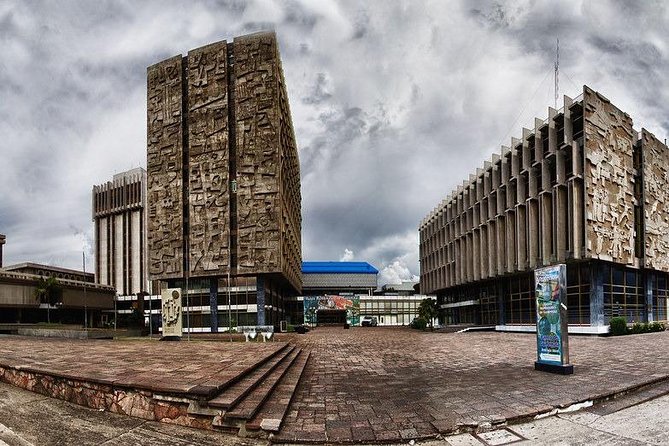
- See Guatemala City’s civic core: Centro Cívico brings together City Hall, the Bank of Guatemala, and other major public buildings.
- Walk through Zone 1: The route links churches, old government-era buildings, Central Market, and Plaza de la Constitución.
- Keep the group manageable: The maximum group size is 15, though the outing may sometimes operate with only two people or even a single booking.
- Finish at San Martín: The final stop offers a chance to buy a Guatemala coffee and sit down after the walk.
- Expect a compact city orientation: At $30, the value is strongest if you want context and local transport help in a short morning.
Why the bus ride changes the morning
Many city tours keep you behind glass. This one begins at the Westin Camino Real on Avenida La Reforma and uses public transportation to reach the historic center. Your fare is included, and the guide can later point you toward the Transmetro route back to the hotel area from Central Plaza.
That small detail matters. Guatemala City can feel spread out, and a first visit is easier when someone helps connect the modern hotel district with Zone 1. You are not simply looking at monuments in isolation. You are seeing how the city’s present-day transport system links to its older public buildings, churches, markets, and plazas.
The meeting time is 10:30 a.m., with a total duration of roughly two to two and a half hours. That makes this a useful first activity after arrival or a compact introduction before an afternoon plan. You should still allow some flexibility. The listed stops add up to more time than the advertised duration, so the guide may adjust the amount of time spent at each location and the walking pace.
A few more Guatemala City days to weigh up
- PRIVATE SHUTTLE From Airport/Guate City to ANTIGUA or Vice-versa
★ 5.0 · 120 reviews - Lake Atitlán Sightseeing Cruise with Transport from Guatemala City
★ 4.5 · 87 reviews - Antigua Guatemala Full-Day Shared City Tour
★ 5.0 · 84 reviews
Centro Cívico and the work of Recinos
The first sightseeing stop is Estación Centro Cívico. From here, you see a group of important public buildings, including City Hall, Banco de Guatemala, Banco Crédito Hipotecario Nacional, and Social Security offices.
This is a good place to begin because it introduces Guatemala City through public architecture rather than tourist decoration. The buildings represent banking, municipal government, and social services. Your guide can help explain how the civic center functions as a working part of the capital, not just a photo stop.
The route also brings in the work of engineer Recinos, who was responsible for monitoring, construction, and creative development of the Guatemalan Cultural Center Miguel Ángel Asturias. The supplied information does not specify how much time you spend inside or whether interior access is part of the walk, so expect an exterior-focused introduction unless your guide says otherwise.
You have about 15 minutes here. That is enough for an overview and photographs, but not a detailed architectural study. If modern civic design interests you, listen closely and ask questions early.
National Typography and the old communications network
The next substantial stop is the General Directorate of Diario de Centro América and National Typography. The first National Typography building operated from 1894 to 1918 on what was then called Hospital Street. In 1935, President Jorge Ubico ordered a new building for the operation.
You get about 20 minutes here, which gives the guide room to explain the role of printing and official communication in Guatemala’s public life. The site adds a useful layer to the morning: Guatemala City’s story is not only about churches and colonial-era squares. Newspapers, government notices, and printed material helped shape how the country communicated with its citizens.
Admission is not included, and the tour information does not promise an interior visit. Treat this as a stop for context and architecture rather than a museum visit.
El Calvario and San Francisco
Parroquia Rectoral Nuestra Señora de los Remedios, commonly called El Calvario, has had a complicated history. The original church stood on Cerro del Cielito at the end of Sixth Avenue in the Historic Center. In 1936, it became the National Museum of History, and it was later demolished to make room for the extension of one of the city’s main roads.
That history makes the 10-minute stop more interesting than a simple church visit. You are looking at a place shaped by urban change, shifting public use, and road construction. The short time here means you will receive the essential story rather than a long examination of religious art or architecture.
I also like that the itinerary includes Iglesia San Francisco. This Catholic church belongs to the conventual Franciscan friars and forms part of the territory of the Parish of Our Lady of Remedies. It sits in the Historic Center and gives you another view of the city’s religious presence.
Again, the scheduled stop is about 10 minutes. The appeal is the contrast between the two churches and the surrounding streets. If you want long interior visits, this outing may feel brisk. If you want a broad orientation, the short pauses help keep the route moving.
More walking tours in Guatemala City:
- Guatemala City: Walking Tour
★ 4.9 · 42 reviews - Antigua Guatemala: City Highlights Guided Walking Tour
★ 5.0 · 462 reviews - Antigua Guatemala: Street Food Walking Tour with Tastings
★ 4.8 · 87 reviews - La Antigua Horror Stories Night Walking Tour
★ 4.9 · 74 reviews
The Palacio de Comunicaciones and Casa Ibargüen
The General Directorate of Posts and Telegraphs occupies a building formerly known as the Palacio de Comunicaciones. Rafael Pérez de León and Enrique Riera designed it, and construction began in 1938 during the government of Jorge Ubico.
The first phase opened two years later as part of the president’s birthday celebration. Two more phases followed over the next five years. This is a useful stop for understanding how government projects were tied to public ceremony and national communications.
The visit is planned for about 15 minutes. Look for the relationship between the building’s size and its original purpose. Postal and telegraph systems once carried news, personal messages, and official business across the country. The tour gives you that historical frame without asking you to spend half a day in a single building.
Casa Ibargüen receives a longer 30-minute stop. The building was once the Beltranena palace, built in 1778. Today it houses the Foundation of the Historic Capital Center.
This is one of the route’s best contrasts. After the formal public architecture of the twentieth century, you get an older palace connected with the colonial-era city. The current foundation also points to the ongoing effort to care for and reuse historic buildings.
The supplied details do not confirm a formal admission ticket or interior tour. Ask your guide what you will see inside on your date. The 30-minute allotment suggests this may be a more substantial stop than the quick exterior pauses earlier in the morning.
Plaza de la Constitución, the city’s main stage
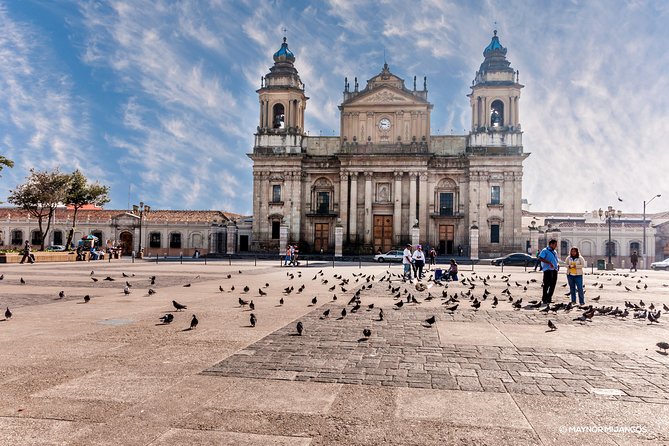
The walk reaches Plaza de la Constitución, also called Central Park. This is the largest square in Guatemala, framed by the National Palace to the north, Metropolitan Cathedral to the east, Portal of Commerce to the south, and Centennial Park and the National Library to the west.
The plaza is not just an attractive open space. It is a place for Independence Day celebrations, parades, concerts, speeches, demonstrations, and political protest. The entrance of the National Palace is also kilometer zero for roads across Guatemala.
That last detail gives the square a practical center as well as a symbolic one. Stand here and the city’s government, church, commerce, public memory, and transport routes come together in one view.
You have about 15 minutes, though the tour ends here and you may choose to stay longer. This is also where your guide can direct you to the Transmetro for the return toward the hotel area. The official endpoint is Plaza de la Constitución, so you are free to continue exploring Zone 1 on your own after the group portion ends.
Metropolitan Cathedral and Central Market
Catedral Metropolitana de Santiago de Guatemala is one of the major landmarks around the plaza. The cathedral has experienced more than two centuries of political and natural change, including two major earthquakes, independence, and revolution. Its Carrara marble altar was installed on July 23, 1860.
The planned visit lasts about 15 minutes. That is enough for a short explanation and a look at the building, but you should not expect a complete religious or architectural tour. The cathedral works best here as part of the larger plaza story.
Then the route moves to Mercado Central. This is where the morning becomes more sensory and practical. The market grew from a difficult urban problem: an abandoned square, a damaged chapel, and a cemetery that had become overcrowded after the capital moved to the La Ermita Valley.
Dr. Mariano Gálvez proposed turning the unhealthy square into a market. The plan ran into trouble when recently buried corpses were exhumed, an outbreak of morbid cholera was blamed on the premature exhumation, and church authorities opposed the use of sacred land. That background shows how public health, religion, and city planning collided in the market’s creation.
You have about 20 minutes here. I would use them to stay close to the guide, observe how the market is organized, and ask what foods or products are typical. One past participant particularly enjoyed the market and ate lunch there with a guide, but lunch is not included in the $30 price. If you want to eat at Central Market, plan for extra time and money after the formal tour.
A coffee finish at San Martín
The final stop is San Martín in the Historic Center, in the old Pavón House on Paseo de la Sexta and 10th Street. The building was revitalized for the bakery and restaurant chain.
The plan is to finish with a cup of Guatemala coffee. Coffee and tea are not included, so treat this as an optional purchase rather than part of the tour price. After public transport and a walk through Zone 1, a seated pause is a sensible ending.
This stop also gives you a chance to ask final questions while the city’s sights are still fresh. The scheduled 30 minutes may feel generous for a coffee stop, particularly if the group has moved slowly earlier. That is useful if you want to linger, but it may frustrate you if you prefer a quick, tightly timed tour.
What the $30 price gets you
At $30 per person, the strongest value comes from the combination of a local guide, public bus fare, and a broad route through the historic center. You see at least ten named locations in a short outing, and you avoid having to work out the connection between the Westin Camino Real, public transportation, and Zone 1 on your own.
The price does not cover coffee, tea, lunch, or admission tickets. Since the route appears largely oriented toward public spaces and exterior explanations, that may not add much cost during the morning. Still, budget separately if you want to eat at Central Market or buy coffee at San Martín.
The group limit is 15 people. That is small enough for questions to be practical, though the experience will feel different with a full group than with a private booking. On some dates, only one booking may be made. In that case, you and your companion may receive a private-style walk without paying a private-tour rate.
Guides, pace, and practical comfort
Armando is described as a former firefighter who knows the city through both work and personal experience. Fidencio is also praised for being patient with questions and making a family with a small child feel comfortable. The guides speak good English according to the supplied information, and one bilingual comment describes the tour as interesting and well organized.
The best reason to choose this activity is the guide’s ability to add meaning to ordinary-looking streets. The route includes government structure, Mayan history, architecture, communications, religion, and public markets. Much of that value comes from explanation, so this is not the right choice if you want to hurry from photo to photo.
Wear a hat, apply sunscreen, and carry water. The walk takes place outdoors in a warm city, and the route includes several short stops. Comfortable walking shoes will help, though the tour is designed for most people to participate.
The tour requires good weather and a minimum number of bookings. If poor weather or insufficient bookings forces a cancellation, you are offered another date, another experience, or a full refund. You can cancel for a full refund up to 24 hours before the 10:30 a.m. start time. Changes made less than 24 hours before the start are not accepted.
Who should book this Guatemala City walk?
I would choose this tour if you have limited time and want an organized first look at the capital. It suits solo visitors, couples, families, and anyone who wants help using public transportation without spending hours planning the route.
It is also a good match if you care about the city’s working history: banks, government offices, printing, postal services, churches, markets, and public squares. You will see more than the usual postcard sights, but you will not get long museum visits or extended time inside every building.
I would hesitate if you dislike walking in the heat, need a tightly timed schedule, or want a slow architectural tour. The route covers a lot, and the schedule can feel slow to someone who prefers a brisk pace. Ask your guide at the start how the stops will be handled, especially if you have a later appointment.
Should you book it?
Book it if you want a practical introduction to Guatemala City that combines public transport, local history, and the central sights of Zone 1 for $30. Armando and Fidencio appear to be the kind of guides who add the most value through conversation and explanation, particularly if you ask questions.
Skip it if you want to explore independently or spend a long time inside individual monuments. For most first-time visitors with a free morning, though, this is a sensible way to get your bearings, see the city as a working capital, and finish near the places you may want to explore next.
FAQ
Where does the tour start?
The tour starts at the Westin Camino Real on Avenida La Reforma, Guatemala City 01010.
What time does the tour begin?
The start time is 10:30 a.m.
How long does the experience last?
The tour lasts approximately two hours to two hours and 30 minutes.
Where does the tour end?
It ends at Plaza de la Constitución, also called Central Plaza, in Guatemala City.
Is public transportation included?
Yes. Your public transportation fare is included in the tour price.
Is lunch included?
No. Lunch is not included. You may have time to eat at Central Market, but that would be an additional personal expense.
Is coffee included at the final stop?
No. Coffee and tea are not included. The final stop is San Martín in the Historic Center, where you can purchase a drink.
How many people can join the tour?
The maximum group size is 15 people.
Can I cancel for a refund?
Yes. You can cancel at least 24 hours before the start time for a full refund. Cancellations or changes made less than 24 hours before the start are not accepted for a refund.
Just added around Guatemala City
- Hobbitenango and Antigua Tour: From Guatemala City★ 4.2 · 10 reviews
- Pacaya Volcano Tour & Hot Springs from Guatemala City★ 3.9 · 11 reviews
- Guatemala City Highlights Shared Tour★ 4.6 · 14 reviews
- From Guatemala City: Lake Atitlan Full-Day Tour★ 4.2 · 23 reviews
- Combo Tour: Colonial Antigua & Guatemala City Explorer Tour★ 3.9 · 24 reviews
- Iximché: Archaeological Site from Guatemala City★ 4.8 · 4 reviews
- From Guatemala City Hobbitenango Day Tour★ 4.5 · 12 reviews
- From Guatemala City Semuc Champey in one day.★ 4.0 · 26 reviews
Guatemala City Tours, compared.
Lake Atitlán Sightseeing Cruise with Transport from Guatemala City
Read our review →
Lake Atitlan Day Tour from Antigua or the City | Boat & Villages
Read our review →
Pacaya Volcano Tour and Hot Springs from Guatemala City
Read our review →
Private Ground Transfer Guatemala City To Panajachel, LakeAtitlan
Read our review →
Browse the lists this tour appears in