
Reviewed · ANTIGUA GUATEMALA TOURS
Antigua Walking Tour Morning and Afternoon
Antigua’s best introduction is on foot, and this tour gets you quickly into the city’s grand central square, earthquake-damaged churches, former convents, and craft markets. Armando and Moises are named guides associated with the experience, and Moises grew up in Antigua, a useful edge when you want more than dates and building names.
I like the clear route from Central Park to the Mercado de Artesanias, and I like the small maximum group of 15 people. The $27 price is fair for a guided orientation, though admissions are extra and some stops receive only a few minutes, so this is more of a city overview than a slow museum visit.
Key points to know before booking
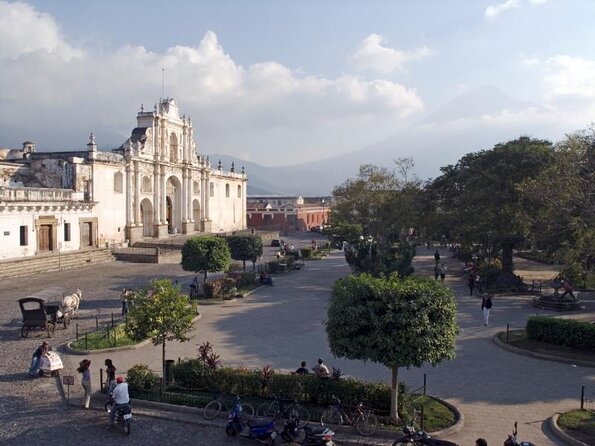
- Central Park is the starting point, with Antigua’s main civic and religious buildings arranged around it.
- The tour covers major colonial landmarks, including San José Cathedral, San Francisco el Grande, and Casa Santo Domingo.
- Local guides add useful perspective, with Moises noted for growing up in Antigua and speaking good English.
- The route ends at the craft market, giving you time to shop on your own afterward.
- Admission fees are not included, and bottled water, coffee, and tea are also your responsibility.
- The group is limited to 15 people, with a total duration of about three hours and 30 minutes.
Why this Antigua walk works as a first look
This is a practical orientation tour rather than a packed sightseeing marathon. You begin at Café Condesa, beside La Casa del Conde on Avenida Norte 5a, and finish at the Mercado de Artesanias, two blocks from Central Plaza. That ending is handy because you can keep shopping after the guide leaves.
I like the way the route moves through Antigua’s central story. The city was planned around a grid in 1541, with the Plaza Mayor at its center. From there, the walk connects government buildings, churches, convents, museums, and commercial spaces. You get a sense of how the city was organized, then see how earthquakes repeatedly changed it.
The other strong point is the guide. A good walking guide can make Antigua’s damaged facades easier to read, and the named guides associated with this tour bring useful local connection. Moises grew up in Antigua, while Armando has been praised for his warm manner and command of the city’s architecture and past. The experience is offered in morning and afternoon versions, so you can fit it around other plans.
The limitation is pace. The listed stops add up to roughly two hours and 25 minutes of scheduled visits, while the entire activity lasts about three hours and 30 minutes. That leaves time for walking and explanation, but the Museo de Arte Colonial receives only five minutes in the published plan. You should expect a guided introduction, not enough time to examine every room or object.
More Walking Tours in Antigua
- Antigua Guatemala: City Highlights Guided Walking Tour
★ 5.0 · 462 reviews - Antigua Guatemala: Street Food Walking Tour with Tastings
★ 4.8 · 87 reviews - La Antigua Horror Stories Night Walking Tour
★ 4.9 · 74 reviews
Central Park and the city grid
The Plaza Mayor, now called Central Park, is the right place to begin. Antigua was planned in 1541 using a straight, reticulated street pattern. The central square measured about 112 meters from north to south and 115 meters from east to west, with the principal buildings placed around its edges.
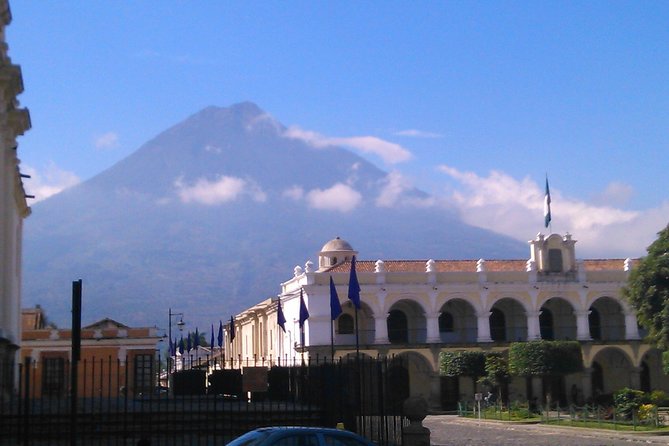
The guide can help you read the square as a working civic plan. To the north are the Portal of Chains and the Noble City Hall. To the east are the Episcopal Palace and the Cathedral of Santiago. The Royal Palace occupies the south side, while the Merchants Portal, also called the Portal of Panaderas, is on the west.
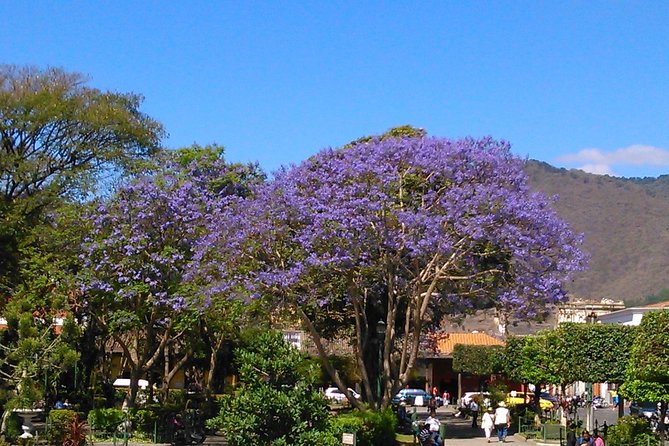
At the center is the Fountain of the Sirens, built in 1739 by Diego de Porres. Five Esquisúchil trees, planted around 1994, now add greenery to the square. The details may sound formal on paper, but in person they give you a useful way to understand Antigua: look outward from the fountain, and the city’s original power structure becomes easier to see.
The scheduled visit is 20 minutes, with admission not included. This is mainly an outdoor stop, so it gives you an easy start before the church and museum interiors. It is also a good place to ask your guide how the earthquakes affected the city, since that theme returns throughout the walk.
San José Cathedral and the remains of Santiago
The Catedral de San Jose occupies part of the former Cathedral of Santiago de los Caballeros. The first cathedral began in 1545, using material brought from the earlier settlement in the Almolonga Valley. Construction took time because earthquakes repeatedly damaged the building.
A second sanctuary opened in 1680 after an earlier structure was demolished in 1669. Juan Pascual and José de Porres directed the work, and records also connect the reconstruction with the Spanish engineer and sculptor Martín de Andújar Cantos.
The church you see today is not simply an old cathedral preserved intact. It is a surviving section of a religious complex that endured repeated destruction and rebuilding. That distinction matters. Antigua’s appeal is not only in polished colonial facades. It is also in the visible evidence of what happened to them.
Plan on about 20 minutes here, and remember that admission is not included. The short visit should be enough for an overview and some explanation, but you may want to return later if you prefer to inspect the building slowly. The tour gives you context first, then you can decide which sites deserve more of your own time.
The Museo de Arte Colonial and the university connection
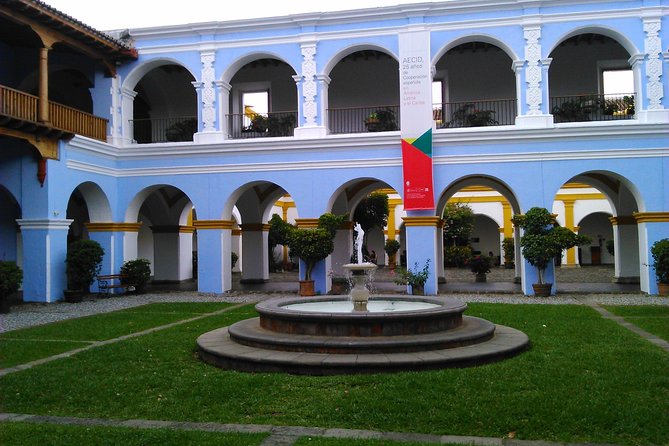
The Museo de Arte Colonial is linked with the former University of San Carlos. The University of San Carlos de Guatemala, known as USAC, is the country’s oldest and largest university and the only national university in Guatemala. It was also the fourth university founded in the Americas.
The institution began as the Royal and Pontifical University of San Carlos Borromeo in 1676. It operated during the Spanish colonial period under royal approval, with support from the Holy See and direction from Catholic religious orders. After Guatemala’s independence in 1821, it was known simply as the Pontifical University until 1829.
The stop is scheduled for only five minutes, and admission is not included. That is the clearest sign that this walking tour is not designed for a museum-focused day. You will likely receive the essential setting and purpose of the building, but you should not count on a long look at the collection.
I see this as a useful orientation stop for someone who wants to understand how education, religion, and colonial government were connected. If art is your main interest, plan a separate return visit rather than expecting this brief stop to satisfy you.
A few more Antigua Guatemala days to weigh up
- From Antigua: Adventure, 2-Day Hiking to Acatenango Volcano
★ 4.4 · 1,189 reviews - From Antigua: Pacaya Volcano Tour in English/Spanish
★ 4.5 · 930 reviews - From Antigua: Pacaya Volcano Trek
★ 4.4 · 798 reviews - Antigua, Guatemala: Volcano Acatenango Overnight Hiking
★ 4.6 · 645 reviews
San Francisco el Grande and Pedro de San José de Betancur
The Sanctuary of San Francisco el Grande offers one of the tour’s strongest examples of Antigua’s long rebuilding cycle. The first sanctuary dates to the mid-sixteenth century and was damaged by an earthquake in 1565. The current church was built in 1702 by Diego de Porres, then damaged by earthquakes in 1717, 1751, and 1773.
The complex suffered further damage in 1874 and 1917 after years of neglect. Reconstruction took place during the second half of the twentieth century, after the Guatemalan state again allowed religious orders to own property in the country. The Franciscans returned to the complex in 1967.
The church is also known for the tomb of Pedro de San José de Betancur, a Spanish missionary who worked in Guatemala and became a saint. That gives the stop a human focus. You are not only looking at walls repaired after earthquakes. You are also encountering a place tied to one of Guatemala’s most important religious figures.
Allow about 20 minutes, with admission extra. I would pay attention to the guide’s explanation here, since the building’s appearance makes more sense once you know which parts were built, damaged, abandoned, and restored at different times.
Concepción Convent and the city’s urban nuns
The Concepción Convent is a ruined complex beside the Pensativo River. It is associated with Sister Juana de Maldonado, a poet and one of the most interesting figures connected with Santiago de los Caballeros de Guatemala, the city’s former name.
Sister Juana professed as an urban nun at the convent during the first half of the seventeenth century. The phrase urban nun is useful because it points to a different kind of religious life from the isolated image many people carry. This was part of the city itself, connected to its social and cultural world.
No visit length or admission detail is provided for this stop, so I would treat it as a flexible viewing point along the route rather than a guaranteed long interior visit. Ruins can be easy to pass without context, and this is one place where a local guide’s explanation adds real value.
Casa Santo Domingo’s former convent and museums
Casa Santo Domingo occupies the former Convent of Santo Domingo, once one of the largest convents in the Americas. Today it operates as a five-star hotel and museum, preserving Baroque architecture and displaying objects connected with the colonial period.
The complex opened as Casa Santo Domingo in June 1989. It is about a 10-minute walk from Central Park, which makes it a natural stop on a central Antigua route rather than an out-of-the-way detour.
The scheduled visit lasts 30 minutes, and admission is not included. That is enough time to get a sense of the old convent, see its preserved architectural features, and learn how the site has been adapted for present use. It may not be enough for a careful examination of every museum display, especially if your interests run toward religious art or colonial architecture.
I like this stop because it shows Antigua’s past being used rather than frozen. The former religious complex now combines lodging, museum spaces, and preserved historic fabric. That contrast gives you a more complete picture of the city than a sequence of ruined churches alone.
The artisan market and the Iglesia del Carmen facade
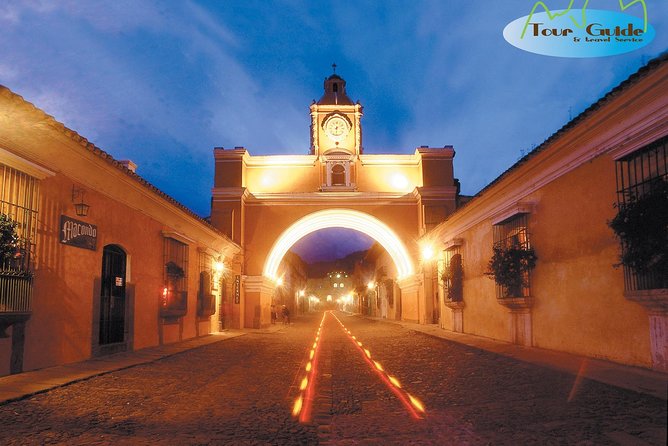
The tour ends at the Mercado de Artesanias, where you can shop on your own. This is a sensible final stop because you do not have to carry purchases through the rest of the walk. The market is two blocks from Central Plaza, so returning to the center afterward is straightforward.
The itinerary also connects this part of the walk with the former Iglesia de Nuestra Señora del Carmen. The church was destroyed by the Santa Marta earthquakes in 1773, but its facade survived in unusually good condition. It is admired as an example of Guatemalan seismic Baroque architecture.
The church was commonly called Iglesia del Carmen, a name that continued after the Carmelite nuns moved to Guatemala City following the earthquakes. The facade is a useful reminder that Antigua’s most revealing buildings are sometimes the portions left behind, not complete churches.
The market visit is listed as 30 minutes and admission is free. If you enjoy buying crafts, this gives you a convenient introduction, but remember that the actual shopping is on your own. The guide’s role ends with the tour rather than turning the market into a longer guided buying session.
What the $27 price really covers
At $27 per person, the tour offers a reasonably priced guided introduction to Antigua. The fee covers the guide and about three and a half hours of walking, but not admissions, bottled water, coffee, or tea.
That price makes the most sense if you are new to Antigua and want the city explained before choosing which sites to revisit. You are paying for orientation, local interpretation, and a planned route through several major places. If you already know the city well, the brief museum stop and extra admission costs may make the value less compelling.
The cost can rise if you enter several paid sites. Since the exact admission fees are not supplied, I would carry extra money and confirm the entrance charges before the walk begins. A morning or afternoon schedule also lets you avoid giving up a full day to sightseeing.
Timing, group size, and practical comfort
The experience lasts about three hours and 30 minutes, and the maximum group is 15 people. That is small enough for a guide to address the group without the walk feeling like a large procession, though the experience will still be shared rather than private.
The meeting point is Café Condesa, at La Casa del Conde, Avenida Norte 5a. The end point is Mercado de Artesanias at H759+934, 3a Avenida Norte. You should make sure you have the correct starting place before setting out, since the tour does not begin at the market or directly in Central Park.
The tour is near public transportation, service animals are allowed, and most people can participate. The supplied details do not describe the walking surface, stair count, or restroom access, so ask the operator if those points matter to you.
Bring water, since it is not included. Comfortable walking shoes are sensible for a route through streets, courtyards, and historic sites. If the weather turns poor, the activity may be canceled, with a different date or a full refund offered.
Free cancellation is available up to 24 hours before the start time. A cancellation inside that window is not refundable, and changes inside 24 hours are not accepted. The tour also requires a minimum number of participants, so a cancellation for that reason comes with the choice of another date or experience, or a full refund.
Who should book this Antigua tour?
I would choose this walk if you have limited time in Antigua, want a broad introduction, or prefer a guide to connect the city’s buildings into one story. It suits first-time visitors, architecture fans, and anyone who wants to learn how earthquakes shaped the city.
The experience is also a good fit if you value a local guide. Moises’s connection to Antigua and Armando’s strong presentation are worth noting when you request or confirm a guide, though the assigned guide may vary.
I would choose something else if you want long, quiet visits inside museums, extensive time at each church, or a private itinerary built around one subject. The five-minute museum stop is especially brief, and admissions cost extra.
Should you book it?
Book this tour if you want a well-priced first orientation with a local guide, a manageable group, and a route that ends near shopping. The strongest parts are Central Park, San Francisco el Grande, Casa Santo Domingo, and the earthquake story that links nearly every stop.
Skip it, or treat it only as a first look, if you already know Antigua or prefer to explore at your own pace. For most first visits, though, $27 is a fair exchange for a guided walk through the city’s main colonial landmarks, followed by time to browse the artisan market independently.
FAQ
How long does the Antigua walking tour last?
The tour lasts approximately three hours and 30 minutes.
How much does the tour cost?
The price is $27 per person.
Where does the tour begin?
The meeting point is Café Condesa at La Casa del Conde, Avenida Norte 5a, Antigua Guatemala.
Where does the tour end?
The tour ends at Mercado de Artesanias, H759+934, 3a Avenida Norte, Antigua Guatemala.
Are admission fees included?
No. Admission fees are not included in the tour price.
Are drinks included?
No. Bottled water, coffee, and tea are not included.
How large is the tour group?
The activity has a maximum of 15 participants.
Can I cancel for a full refund?
Yes. You can cancel at least 24 hours before the experience start time for a full refund. Cancellations made less than 24 hours in advance are not refunded.
More Morning in Antigua Guatemala
- Pacaya Volcano Morning Tour from Antigua
★ 5.0 · 75 reviews - Antigua Guatemala: Morning Tour from Guatemala City
★ 4.5 · 63 reviews - From Flores: Tikal Sunrise Archaeological Tour
★ 4.5 · 147 reviews - Mayan Nose Sunrise Hiking
★ 4.5 · 62 reviews
More Walking Tours in Antigua Guatemala
- Walk Antigua Like a Local
★ 5.0 · 53 reviews - Private Walking tour of Antigua Guatemala
★ 4.5 · 40 reviews - Walk Antigua Like a Local
★ 4.8 · 29 reviews - Guatemala city Walking Tour and public bus
★ 5.0 · 63 reviews
Just added around Antigua Guatemala
- From Guatemala City, Tour to Antigua Guatemala★ 4.5 · 3 reviews
- Antigua: Altamira and Hobbitenango Movie Themed Parks Tour★ 4.8 · 3 reviews
- Antigua Guatemala: Half-Day Mountain Bike Tour with Guide★ 5.0 · 3 reviews
- Antigua Guatemala: Full day tour.★ 4.8 · 4 reviews
- Hobbitenango & Antigua Shared Day Tour★ 5.0 · 4 reviews
- 2-day tour from Antigua 1 night in Acatenango Volcano★ 3.1 · 4 reviews
- Antigua ATV cultural adventure★ 5.0 · 4 reviews
- One-day tour from Antigua to Lake Atitlán★ 4.6 · 5 reviews
Antigua Guatemala Tours, compared.
From Antigua: Adventure, 2-Day Hiking to Acatenango Volcano
Read our review →
From Antigua: Pacaya Volcano Tour in English/Spanish
Read our review →
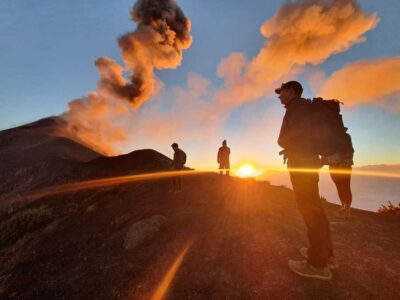
Antigua, Guatemala: Volcano Acatenango Overnight Hiking
Read our review →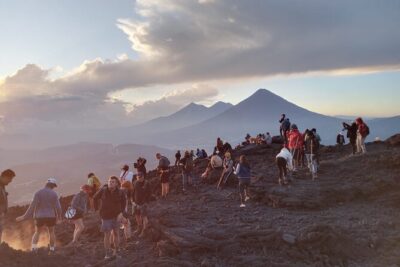
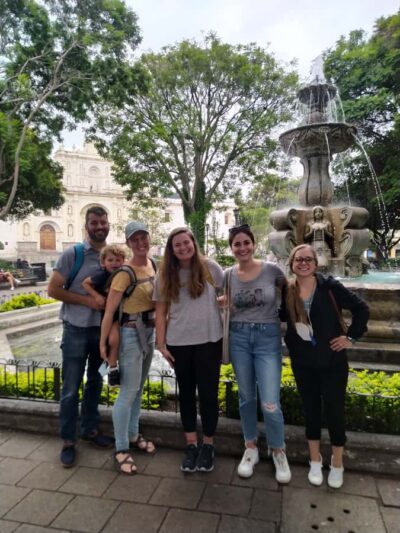
Antigua Guatemala: City Highlights Guided Walking Tour
Read our review →
FROM ANTIGUA, ROUND TRIP: EXPLORING THE VILLAGES OF LAKE ATITLÁN.
Read our review →
Browse the lists this tour appears in